

Lithium Brine Deposits: How Lithium Is Concentrated in Salt Lakes
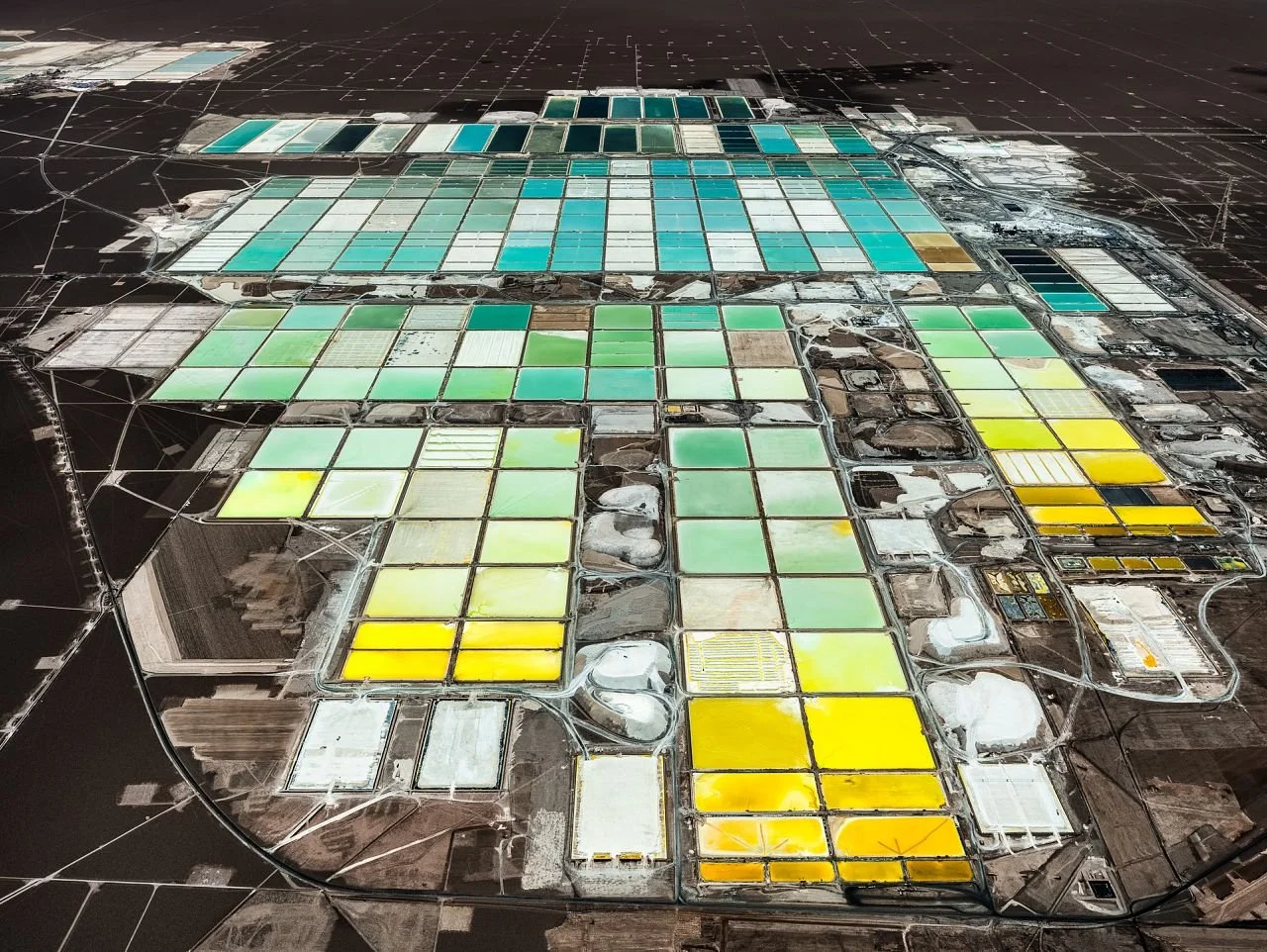
Picture of Lithium brine ponds in south America
Lithium brine deposits are one of the most important sources of lithium in the world. Unlike lithium hosted in hard rock or claystone deposits, lithium brines form when lithium-rich groundwater accumulates in closed desert basins and becomes concentrated through evaporation.
These deposits occur primarily in arid regions with closed basin hydrology, where water entering a basin has no outlet and can only leave through evaporation. Over long periods of time, dissolved elements—including lithium—become progressively concentrated within groundwater and subsurface brines.
Today, lithium brines supply a large portion of the world’s lithium production and play a critical role in the global battery supply chain.
Where Lithium Brine Deposits Form
Lithium brine deposits typically form in closed desert basins known as salars or salt flats. These environments are common in tectonically active regions where mountain ranges surround internal drainage basins.
Some of the most famous lithium brine districts occur in:
The Lithium Triangle of Chile, Argentina, and Bolivia
Western Nevada in the United States
Parts of China and Tibet
These basins share several geological characteristics that allow lithium to accumulate.
Key conditions include:
Closed hydrologic systems with no outlet
Arid climates with high evaporation rates
Lithium-bearing volcanic rocks or sediments in surrounding mountains
Long-term basin development
When these conditions occur together, lithium can gradually accumulate in basin groundwater over thousands to millions of years.
The Geological Sources of Lithium
Lithium present in brine deposits ultimately originates from surrounding rocks within the basin’s drainage area.
Common lithium sources include:
Volcanic ash and rhyolitic volcanic rocks
Hydrothermal fluids associated with volcanism
Weathering of lithium-bearing minerals in surrounding mountains
Lithium released from volcanic glass and clays
As groundwater flows through these rocks, it dissolves small amounts of lithium and transports it into the basin.
Over time, lithium-bearing groundwater migrates toward the lowest parts of the basin where brines accumulate.
How Lithium Becomes Concentrated
The key process that creates lithium brine deposits is evaporation.
When lithium-bearing groundwater reaches shallow basins or playas, evaporation removes water while leaving dissolved salts behind. Because lithium is highly soluble, it remains in solution longer than many other minerals.
As evaporation continues, lithium concentrations gradually increase within subsurface brines.
Over long periods of time, this process can produce brines with lithium concentrations high enough to be economically extracted.
Lithium brine deposits often occur beneath or near salt flats, where thick accumulations of evaporite minerals such as halite and gypsum may be present.
Extracting Lithium from Brines
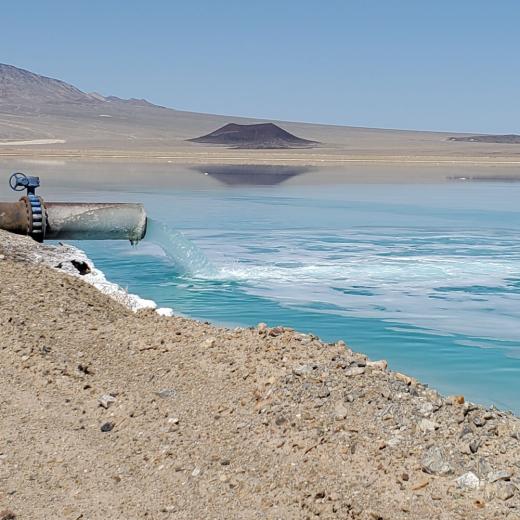
Picture of a Brine pond at silver peak mine
Lithium extraction from brine deposits typically involves pumping lithium-rich brines from underground aquifers to the surface.
The brine is then placed into large evaporation ponds, where sunlight and dry climate conditions cause water to evaporate over several months to several years.
As evaporation progresses, different salts crystallize and are removed, gradually concentrating lithium within the remaining brine.
The concentrated brine is then processed to produce lithium chemicals such as:
Lithium carbonate
Lithium hydroxide
These products are used in battery manufacturing and other industrial applications.
Why Climate Matters
Climate is one of the most important factors controlling lithium brine formation and production.
Ideal lithium brine environments typically have:
Low annual rainfall
High evaporation rates
Large, flat basin floors
Long-term tectonic stability
Arid climates allow evaporation to occur faster than water enters the basin, which helps concentrate lithium within brines.
For this reason, many of the world’s largest lithium brine deposits occur in desert environments.
Lithium Brines vs Other Lithium Deposit Types
Lithium resources occur in three primary geological settings:
Lithium Brines
Lithium dissolved in saline groundwater within desert basins.
Lithium Pegmatites
Hard rock deposits where lithium occurs in minerals such as spodumene.
Lithium Clay Deposits
Lithium hosted within clay minerals derived from volcanic ash.
Each deposit type has different exploration methods, extraction technologies, and economic characteristics.
Silver Peak: The Only Operating Lithium Brine Mine in the United States
One of the most well-known lithium brine operations in the United States is the Silver Peak Lithium Mine in Clayton Valley, Nevada. Operated by Albemarle Corporation, the Silver Peak facility is currently the only producing lithium mine in the United States and has been in operation since the 1960s.
The lithium brines at Silver Peak occur within groundwater aquifers beneath the Clayton Valley salt flat. These brines are pumped from underground wells and transported to a series of evaporation ponds where water is removed through natural evaporation.
As the brine becomes progressively concentrated, lithium is separated from other dissolved salts and processed into lithium carbonate, which is used in battery production and other industrial applications.
Clayton Valley is considered one of the earliest recognized lithium brine districts in North America and remains an important example of how lithium can accumulate within closed desert basins.
The success of the Silver Peak operation has helped demonstrate the viability of lithium brine extraction in Nevada and has contributed to renewed exploration interest in similar basin environments across the western United States.
The Future of Lithium Brines
As global demand for lithium continues to grow, lithium brine deposits will remain an important part of the battery supply chain. Advances in processing technologies—including direct lithium extraction (DLE)—may allow lithium to be recovered more efficiently from brines and potentially reduce the need for large evaporation ponds.
Understanding how lithium brines form and where they occur is therefore an important part of modern mineral exploration.
These deposits illustrate how geological processes, climate, and basin evolution work together over long periods of time to concentrate critical minerals that are essential for modern technologies.
Sources
Munk, L. A. et al. (2016) Lithium Brines: A Global Perspective – Reviews in Economic Geology
Kesler, S. E. et al. (2012) Global Lithium Resources – Ore Geology Reviews
United States Geological Survey – Lithium Resources and Production
Nevada Bureau of Mines and Geology – Lithium Resources of Nevada
Albemarle – Silver Peak Lithium Operation
