

10 Field Signs an Ancient Drainage May Contain Gold
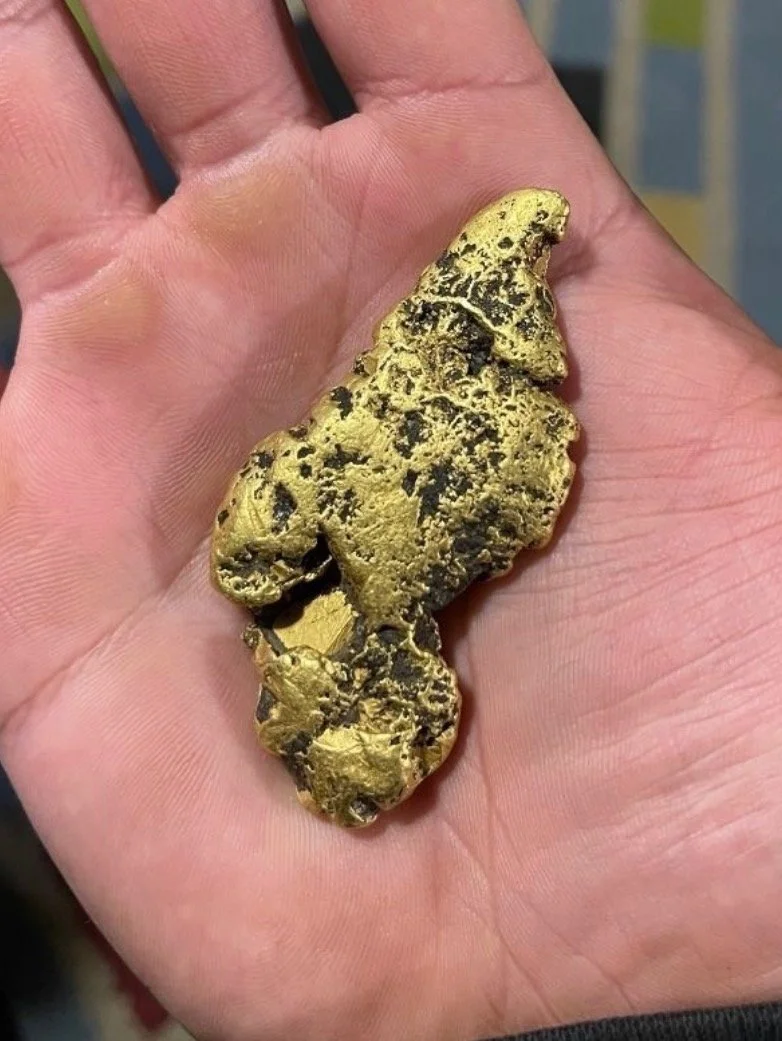
Picture of Placer gold Nugget found in Nevada
In many parts of the western United States—particularly in arid regions such as Nevada—placer gold deposits are often found not in modern streams but within ancient drainage systems that formed thousands or even millions of years ago. These abandoned river channels, known as paleochannels, once carried flowing water capable of eroding gold from mineralized bedrock and concentrating it within gravel deposits.
Over time, tectonic activity, erosion, and sediment deposition reshaped the landscape. Rivers were diverted, valleys filled with alluvial sediments, and many ancient channels became buried beneath younger deposits. In some cases these paleochannels are still partially exposed at the surface, while in others they lie hidden beneath layers of sand, gravel, and desert alluvium.
Recognizing the geological signs of these ancient drainage systems is one of the most important skills in placer gold exploration. The following field indicators may suggest that an ancient river system capable of concentrating gold once existed in an area.
1. Rounded Stream-Worn Cobbles
One of the clearest indicators of an ancient stream channel is the presence of rounded cobbles and gravels.
As rocks are transported by flowing water, they collide and grind against one another, gradually smoothing their edges and producing rounded shapes. The longer a clast remains within an active stream system, the more rounded it typically becomes.
These rounded cobbles contrast strongly with the angular fragments typically found in slope deposits, debris flows, or alluvial fans that formed through gravity-driven processes rather than stream transport.
If rounded cobbles are discovered in areas where no modern streams exist, they may represent remnants of an ancient river channel.
2. Well-Sorted Gravel Deposits
Flowing water naturally sorts sediments according to size and density. As a result, ancient river channels often contain well-sorted gravel deposits, where clasts of similar size are grouped together.
These deposits may display sedimentary features such as:
Distinct gravel layers separated from sand or silt
Cross-bedding formed by migrating stream bars
Imbricated clasts that indicate paleoflow direction
Well-sorted gravels are often associated with the main channel of a river, which is where the highest energy transport occurs. These channel gravels are frequently the most favorable environments for placer gold accumulation.
3. Concentrations of Black Sands
Placer gold rarely occurs alone. Because gold is extremely dense, it is typically concentrated alongside other heavy minerals that behave similarly in flowing water.
Common heavy minerals associated with placer gold include:
Magnetite
Hematite
Garnet
Ilmenite
Chromite
These minerals often accumulate together as dark layers known as black sands.
Black sand layers commonly form in areas where water velocity decreases and heavy minerals settle out of suspension. Although black sands do not guarantee the presence of gold, they often occur in the same depositional environments where gold concentrates.
4. Abrupt Changes in Sediment Grain Size
Gold tends to accumulate in locations where the velocity of flowing water decreases and heavier materials begin to settle.
One important indicator of this process is an abrupt change in sediment grain size, where coarse gravels transition into finer sands or silts.
These transitions often occur where:
Streams exit steep mountain terrain
Valley gradients suddenly decrease
Rivers widen into broader floodplains
Because water slows down in these areas, heavy minerals such as gold may settle out and accumulate within the gravel deposits.
5. Bedrock Surfaces with Natural Traps
Gold particles moving through a drainage system tend to migrate downward through loose sediment until they reach a surface that prevents further movement.
For this reason, many rich placer deposits occur where gravel layers rest directly on bedrock surfaces.
Irregular bedrock topography can create natural traps where gold accumulates, including:
Fractures and cracks in bedrock
Depressions or potholes
Weathered bedrock pockets
Bedrock ridges that slow sediment transport
These features can act as natural riffles within a stream system, concentrating heavy minerals within specific locations.
6. Terrace Gravels Above Modern Drainage
Ancient river channels are sometimes preserved as terrace deposits located above present-day streams.
Terraces form when rivers cut downward into their own sediment, leaving remnants of older channel deposits stranded along valley margins. These terrace gravels represent former positions of the river channel and may contain placer gold if the river originally transported mineralized material.
Terrace deposits can sometimes be recognized by:
Flat benches along valley walls
Gravel layers elevated above modern streambeds
Well-rounded clasts within otherwise fine sediments
Because they represent former channel environments, these terraces can be important placer exploration targets.
7. Linear Gravel Deposits in Desert Valleys
In desert regions, ancient stream channels may appear as elongated belts of gravel cutting across otherwise fine-grained valley sediments.
These gravel belts can sometimes be traced for long distances across a landscape and may represent remnants of ancient drainage systems that once transported sediment across the basin.
Mapping these gravel belts using aerial imagery or drone surveys can help geologists reconstruct ancient river pathways and identify potential paleochannel targets.
8. Alluvial Fans Below Mineralized Mountain Ranges
Alluvial fans form where streams exit mountainous terrain and spread out into adjacent valleys. As the stream loses energy, sediment is deposited in a fan-shaped pattern.
If the upstream bedrock contains gold-bearing mineralization, erosion can transport gold particles into the fan deposits.
Over time, gold may accumulate within gravel layers on the fan, particularly near:
The apex of the fan
Changes in slope gradient
Channels incised into older fan deposits
For this reason, alluvial fans located below gold-bearing mountain ranges can represent promising exploration targets.
9. Characteristics of Gold Grains
The physical characteristics of recovered gold particles can provide important clues about the distance they have traveled from their original source.
Geologists often examine:
Grain Size
Coarse gold generally indicates proximity to a bedrock source
Fine gold may have traveled longer distances downstream
Grain Shape
Angular gold suggests limited transport
Rounded gold indicates prolonged movement in a stream environment
These observations can help exploration teams trace placer deposits back toward the original lode source.
10. Evidence of Historic Prospecting
Historic prospecting activity can also provide valuable clues when exploring for placer gold.
Old prospect pits, dry washer piles, and abandoned workings often indicate areas where earlier miners encountered gold-bearing gravels.
While many historic sites were only lightly explored, they may still contain significant placer deposits that were overlooked due to limited technology or difficult mining conditions at the time.
Reexamining these areas with modern exploration methods can sometimes reveal new opportunities.
Recognizing Patterns in the Landscape
Individually, any one of these indicators may not confirm the presence of placer gold. However, when several of these features occur together, they may strongly suggest that an ancient drainage system capable of concentrating gold once existed in the area.
Successful placer exploration involves recognizing these patterns across the landscape and testing promising locations through sampling, trenching, or drilling.
By combining geological observation with modern exploration techniques, geologists can reconstruct ancient river systems and identify areas where placer gold may have accumulated.
