

Across the American West, a new resource race is quietly unfolding — not just for lithium, gold, copper, or artificial intelligence infrastructure, but for water itself.
As lithium exploration accelerates, AI data centers expand, and industrial development pushes deeper into already water-stressed regions, access to reliable water is becoming one of the defining constraints of modern project development. In states like Nevada, Arizona, and Utah, securing land and mineral rights is often only part of the challenge. Without legal access to water, even the most promising projects may never become operational.
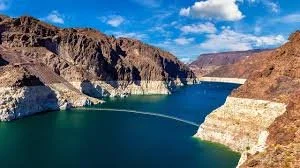
At the same time, the western United States is facing mounting pressure from prolonged drought, declining reservoir levels, reduced snowpack, and increasing power demand. The Colorado River Basin — which supports millions of people, agriculture, mining, municipalities, and major energy infrastructure — is under growing strain. Reservoirs such as Lake Mead and Lake Powell remain far below historical averages, raising concerns not only about water supply, but also about the long-term reliability of hydroelectric power generation at facilities like Hoover Dam.
This intersection of water, energy, mining, and technology is reshaping how projects are evaluated across the West. Water rights are no longer viewed as a simple permitting requirement — they are increasingly recognized as critical infrastructure assets that can determine whether a project succeeds or fails.
For mining companies, energy developers, investors, and AI infrastructure groups alike, understanding water rights and water use permitting is becoming essential to long-term project planning and operational viability.
What Is a Water Right?
A water right is a legally recognized right to use water from a specific source for a beneficial purpose. Unlike owning land, owning a water right does not necessarily mean you own the water itself. Instead, it grants permission to divert and use water under state law.
In western states like Nevada, water rights are generally governed under the doctrine of Prior Appropriation commonly summarized as:
“First in time, first in right.”
This means the earliest valid water users generally have priority during shortages. Senior water rights holders are protected before junior users receive water allocations.
Water rights can apply to:
Groundwater wells
Springs
Rivers and streams
Municipal water systems
Industrial process water
Agricultural irrigation
Mining operations
In many western basins, especially throughout Nevada and Arizona, groundwater is already fully appropriated, making existing water rights extremely valuable assets.
What Is a Water Use Permit?
A water use permit is authorization from a state agency allowing a person or company to develop and use water for a specific purpose.
In Nevada, these permits are administered by the:
Nevada Division of Water Resources (NDWR)
A water permit typically specifies:
Maximum annual water volume
Point of diversion (well location)
Beneficial use type
Place of use
Priority date
Pumping restrictions
Before a permit is approved, regulators evaluate:
Availability of water in the basin
Existing senior rights
Environmental impacts
Potential conflicts with other users
Public interest considerations
In over-allocated basins, new permits may be difficult or impossible to obtain without purchasing or transferring existing rights.
Why Water Rights Matter in Mining
Mining is one of the most water-dependent industries in the western United States.
Water is essential for:
Drilling programs
Dust suppression
Ore processing
Heap leach operations
Metallurgical testing
Reclamation work
Camp operations
Concrete and road construction
For modern critical mineral projects such as lithium, copper, and rare earth development, water access can determine whether a deposit is economically viable.
Lithium Projects and Water Demand
Claystone lithium projects in Nevada often require significant water for:
Metallurgical processing
Acid leaching
Evaporation management
Dust control
Infrastructure support
Brine lithium projects require even larger water management systems due to extraction and reinjection requirements.
As the domestic demand for lithium increases alongside electric vehicle production and battery manufacturing, water rights are becoming a strategic component of project development.
In many cases, acquiring water rights can take years and cost millions of dollars.
Water Rights as a Strategic Asset
Many mining investors focus on:
Drill results
Resource estimates
Metallurgy
Infrastructure
But experienced operators understand that water can be just as critical as the mineral resource itself.
A project with:
Strong grades
Good metallurgy
Favorable permitting
may still struggle if it lacks secure long-term water access.
Because of this, companies increasingly evaluate:
Existing basin allocations
Nearby water rights holders
Historical agricultural rights
Municipal water availability
Groundwater modeling
Long-term sustainability
In some Nevada basins, water rights transactions now rival the value of the underlying mineral claims.
The Rising Impact of AI Data Centers
Water rights are no longer only a mining or agricultural issue.
The rapid expansion of AI infrastructure and hyperscale data centers is creating a new wave of industrial water demand across the western United States.
Modern AI data centers require enormous amounts of:
Cooling water
Power generation support
HVAC systems
Redundant thermal management infrastructure
Large AI facilities can consume millions of gallons of water annually.
As artificial intelligence expands, companies are aggressively searching for locations with:
Reliable power
Fiber infrastructure
Available land
Secure water access
This is increasingly bringing AI infrastructure into direct competition with:
Mining projects
Agriculture
Municipal growth
Industrial development
Nevada: A Collision Point Between Mining and AI
Nevada is uniquely positioned at the center of this emerging competition.
The state offers:
Vast open land
Strong mining infrastructure
Favorable permitting environment
Renewable energy potential
Strategic location near western markets
At the same time, Nevada’s arid climate means water resources are finite.
As lithium demand grows and AI infrastructure expands, access to water may become one of the defining economic and political issues of the next decade.
Projects that secure:
Long-term water rights
Sustainable water management plans
Efficient recycling systems
will likely hold a major competitive advantage.
The Western Water Crisis
The importance of water rights is becoming even more critical as the American West faces growing long-term water shortages.
The Colorado River Basin — one of the most important water systems in the United States — has experienced approximately a 20% decline in average flow over the last two decades compared to the 20th century average. This decline has contributed to historically low reservoir levels across the Southwest due to:
Prolonged drought
Reduced snowpack
Rising temperatures
Increased industrial and municipal demand
Lake Mead and Lake Powell, the two largest reservoirs in the United States, have both seen dramatic declines in water storage levels in recent years. These reservoirs directly support:
Municipal water supplies
Agriculture
Mining operations
Hydroelectric power generation
Industrial infrastructure across the Southwest
Lake Mead has remained far below historical full-pool conditions for years. In recent years, the reservoir reached historically low elevations, triggering federal water shortage declarations for the first time ever. The broader Colorado River system continues operating under prolonged drought stress as water demand rises across the Southwest.
Hoover Dam and Power Generation Risks
Declining water levels at Lake Mead directly impact Hoover Dam’s ability to generate hydroelectric power. Recent federal projections and regional reporting indicate that ongoing drought conditions, weak snowpack, and reduced inflows into Lake Powell and Lake Mead could significantly reduce hydroelectric generation capacity in the coming years. With the need for power growing exponentially could hydroelectric generation requirements be prioritized over water rights?
Hydroelectric facilities rely on water pressure and flow volume to produce electricity. As reservoir elevations drop:
Power generation efficiency decreases
Turbine output declines
Energy costs can rise
Grid reliability becomes more vulnerable during peak demand periods
According to recent Bureau of Reclamation discussions, reduced releases from Lake Powell could contribute to as much as a 40% reduction in Hoover Dam’s generating capacity under certain low-water scenarios.
This creates a growing concern for industries that require both large amounts of water and stable power infrastructure — particularly:
Mining operations
Mineral processing plants
AI data centers
Semiconductor manufacturing
Large industrial facilities
AI infrastructure growth is expected to dramatically increase power demand across the western United States over the next decade. At the same time, many of the regions best positioned for solar energy, geothermal development, and industrial expansion are already experiencing water stress.
Water, Power, and the Future of the American West
Water and energy are now tightly interconnected strategic resources.
A modern mining project or AI data center may require:
Secure long-term water rights
Stable electrical infrastructure
Cooling capacity
Environmental compliance
Basin sustainability analysis
This means future development in the West will increasingly depend on integrated resource planning rather than simply finding land or mineral deposits.
The companies that succeed in the coming decades will likely be those that can:
Operate with lower water intensity
Recycle water efficiently
Secure sustainable basin access
Reduce energy consumption
Adapt to tightening environmental and infrastructure constraints
In many ways, the next major resource competition in the American West may not be over gold, lithium, or data — but over water itself.
Most Western Water Is Already Allocated
One of the biggest misconceptions about development in the American West is that water is still widely available.
In reality, many western groundwater basins and river systems are already fully appropriated or significantly overcommitted.
Across much of the western United States:
The majority of surface water rights have already been allocated
Many groundwater basins are considered fully appropriated
New water permits are increasingly difficult to obtain
Existing rights are becoming highly valuable strategic assets
The Colorado River itself is one of the most heavily allocated river systems in the world.
Under existing agreements and legal allocations:
The Colorado River is effectively overallocated, with more water promised to users than the river consistently produces during drought years
Roughly 40 million people depend on Colorado River water
The river supports agriculture, municipalities, mining, energy production, and industrial infrastructure across seven U.S. states and parts of Mexico
In Nevada specifically, many hydrographic basins are already designated as:
Fully appropriated
Over appropriated
Or closely monitored for groundwater drawdown
This means new industrial projects often cannot simply apply for “new” water. Instead, companies may need to:
Purchase existing water rights
Transfer agricultural allocations
Enter water banking agreements
Develop recycling systems
Negotiate mitigation strategies
In some regions, the value of the associated water rights can rival or exceed the value of the land itself.
Water Competition Is Intensifying
Historically, the largest consumers of western water were:
Agriculture
Municipal growth
Traditional industry
Agriculture remains the dominant water consumer across much of the American West, accounting for roughly 70–80% of developed water use in many western states.
Today, new demand is rapidly emerging from:
Lithium and critical mineral development
Semiconductor manufacturing
Renewable energy infrastructure
Hydrogen projects
AI and hyperscale data centers
This growing competition is forcing developers and investors to think differently about project feasibility.
A project may have:
Strong economics
Excellent infrastructure
Favorable geology
but still face major challenges if long-term water access cannot be secured.
As a result, water rights are increasingly viewed not just as permits — but as strategic infrastructure assets critical to the future of development in the American West.
The Future of Water in Resource Development
Water rights are evolving from a regulatory requirement into a strategic asset class.
For mining companies, energy developers, AI infrastructure groups, and investors alike, understanding water availability is now critical to evaluating project feasibility.
Future project success will increasingly depend on:
Water efficiency
Recycling technologies
Basin sustainability
Regulatory strategy
Long-term environmental planning
In the modern West, water is no longer just an operational necessity — it is infrastructure, leverage, and long-term security.
Over the next several decades, the competition for water across the American West is expected to intensify as mining, energy, agriculture, municipalities, and AI infrastructure continue expanding into already water-constrained regions. For developers and investors alike, understanding water rights is no longer optional — it is fundamental to evaluating the long-term viability of any major project in the West.
How Unhinged Geology Helps
At Unhinged Geology, we understand that successful project development requires more than geology alone.
We help clients evaluate:
Basin geology and hydrogeology
Water availability risks
Project infrastructure constraints
Exploration and development strategy
Permitting considerations
Long-term project viability
Whether supporting mineral exploration, industrial development, or emerging infrastructure projects, we focus on practical solutions that align geology, resources, and real-world operational needs.
Additional Resources & References
For readers interested in learning more about western water rights, drought conditions, mining infrastructure, and the future of industrial water demand, the following resources provide valuable information and ongoing updates:
Water Rights & Western Water Law
Nevada Division of Water Resources (NDWR)
https://water.nv.gov
Official Nevada water rights database, basin maps, permitting information, and hydrographic basin data.U.S. Bureau of Reclamation
https://www.usbr.gov
Federal agency overseeing major western water infrastructure projects including Hoover Dam, Lake Mead, and the Colorado River system.Colorado River Basin Water Supply & Demand Study
https://www.usbr.gov/lc/region/programs/crbstudy.html
Long-term analysis of future water shortages and demand scenarios across the Southwest.
Drought & Reservoir Monitoring
Lake Mead Water Level Tracker
https://mead.uslakes.info/Level/
Real-time reservoir elevation and historical water level trends.U.S. Drought Monitor
https://droughtmonitor.unl.edu
Weekly drought condition mapping and analysis across the United States.NOAA Climate.gov
https://www.climate.gov
Climate trends, snowpack data, drought outlooks, and western hydrology reporting.
Mining, Lithium, & Industrial Water Use
Nevada Mining Association
https://nvmining.org
Information on Nevada mining operations, permitting, economics, and industry development.Society for Mining, Metallurgy & Exploration (SME)
https://www.smenet.org
Technical resources and publications related to mining engineering and mineral development.USGS Critical Minerals Program
https://www.usgs.gov/energy-and-minerals/critical-minerals-program
Research and reporting on domestic lithium, rare earths, copper, and critical mineral supply chains.
AI Infrastructure & Energy Demand
U.S. Energy Information Administration (EIA)
https://www.eia.gov
National energy demand forecasts, power generation statistics, and grid infrastructure reporting.Lawrence Berkeley National Laboratory – Data Center Research
https://datacenters.lbl.gov
Research on data center energy consumption, cooling systems, and future infrastructure demand.
Recent Reporting on the Colorado River & Hoover Dam
KJZZ – Colorado River & Hoover Dam Power Concerns
Nevada Current – Lake Mead Warming & Infrastructure Risks
Associated Press – Colorado River Drought Coverage
Bureau of Reclamation Reservoir Operations Updates
Water is rapidly becoming one of the defining strategic resources of the American West. Understanding water rights, basin sustainability, and infrastructure limitations is now essential for responsible project development across mining, energy, and emerging technology sectors.
